

If you’re a houseplant enthusiast and you live in the UK, it’s highly likely that you covet the more exotic, lush and leafy wonders that hail from forested, jungly, tropical parts of the world. It’s as likely that you may have found keeping them alive, let alone healthy, a real challenge. In this article we’ll talk about one of the main differences between temperate and tropical parts of the world and one of the largest challenges to growing happy houseplants: humidity. We’ll unpack why it’s important, what it does and why some plants need it more than others.
We covered some of this in the article on Watering: Time for a tipple, but we’ll provide some refreshment and dive a little deeper.
In the wild: The highs and lows
Before we get going, here’s a little summary of the science together with a glossary of some of the trickier terms we’ll talk about:
Humidity: The amount of water vapour in the atmosphere.
Transpiration/Transpirational pull: The flow of water through a plant from its roots to its leaves through xylem vessels. As water evaporates from the leaves, a force is created whereby more water is pulled up through the plant. This keeps the plant hydrated, cool, and distributes nutrients throughout the plant, ensuring healthy growth.
Stomata: Pores on the undersides of leaves through which water vapour is released. Each pore is bordered by guard cells which open or close in response to internal and external stimuli, regulating the release or retention of water within the plant.
If your plant is hydrated (well watered) and humidity is high, the concentration of water inside the leaves and stems isn’t much higher than the surrounding atmosphere, and so less water is lost through transpiration. In these conditions leaves and stems are flexible and hold themselves up to the light, maximising their surface area so they can absorb lots of energy from the sun to convert into the sugars they need to grow (photosynthesis). At root level, water and nutrients will be taken up slowly and evenly, distributed throughout the plant as transpirational pull ticks along.
In hot, dry or windy conditions where humidity is low, water will evaporate more quickly as the plant seeks to cool itself down or be wicked away from around the leaf, increasing transpirational pull. Plants in these conditions need access to more water to replace what they’re losing and if they’re not well watered and the roots detect dryness, the leaves and stems are likely to go soft and limp, looking either shrivelled or wilted and reducing photosynthesis. To preserve as much water as possible, a chemical signal will be sent to the guard cells around the stomata to close up, so that no more water is lost through vapour and transpirational pull is slowed or stopped. For plants that are native to tropical or subtropical climates, which often have thinner leaves and have adapted to high humidity, when these conditions persist for too long, other signs of stress will start to show.
Many tropical plants that grow in forests or jungles have evolved clever strategies to absorb humidity from the air as well as water from their roots below ground. Monsteras, for instance, grow their long tentacle-like aerial roots in order to cling on and climb up other trees so they can reach for the light, but these serve the dual function of absorbing water vapour from the air. Many orchids and Bromeliads don’t grow in the soil at all. As epiphytes which grow in the crevices and the branches of trees, they have adapted to survive on rainfall run-off and to absorb moisture from the air through their leaves and roots.
Side note: If you’ve ever seen the window behind a plant steamed up with condensation, then you’ve seen transpiration in action. And if you’re familiar with terrariums then you’ll know that they create their own contained climate, with the water used for transpiration being released as vapour through the stomata and gathering against the glass in droplets of condensation. These roll down the inside of the little glass house to moisten the soil, mimicking rain, so that the process can begin again. This removes your need to water them.
Signs of stress if humidity is too low:
Wilting
Leaf drop
Dry, crispy patches on leaves
Stunted growth
Increased susceptibility to pests like Red Spider Mite
Closer to home: From tropical to temperate
To put it into perspective, the general ambient humidity in tropical countries is between 77- 90% and in subtropical countries it’s between 90-100%. This is due to their higher temperatures and more frequent rainfall. In our temperate UK climate, the humidity can fluctuate between 45-70% depending on the season and weather conditions. Indoors, in our homes and offices, it’s somewhere between 30-60%, often on the lower end depending on the age of your property and the degree to which it’s insulated and centrally cooled or heated.
Apologies for the bombardment of stats but seeing these figures in black and white helps us understand the difference between the native and imported growing conditions of many of our most loved houseplants. It might also shed some light on why they might then struggle or even suffer in such a different climate. It’s also important to know that while your houseplants might not be coming straight from a jungle in Borneo, Growers in Europe provide young plants with the optimal heat, light, water and humidity to speed up the growth of plants and keep them in tiptop condition, so that by the time you purchase a plant it’s lived its best life. It’s then up to us to give it our best shot by mimicking these conditions at home.
Rest assured, when it comes to humidity there’re plenty of tricks to help regulate transpiration and if you want to know more, we’ll evaporate . . . sorry, elaborate. To help give you a steer as to those plants you should focus on more, here’s a breakdown of some of the most common houseplants and their humidity preferences:
High humidity loving plants
Orchids
Bromeliads
Monsteras
Philodendron
Palms (Kentia, Chamaedorea etc)
Ferns (Boston, Asparagus, Asplenium, Maidenhair, Rabbit’s foot etc)
Calathea/Maranta/Stromanthe/Ctenanthe
Elephant ear/Alocasia
Banana/Musa
Bird of Paradise/Strelitzia
Flexible humidity tolerant plants
Sansevieria
ZZ Plants
Aglaonema
Pothos
Ficus
Cast Iron plants
Low humidity loving plants
Cacti
Succulents
Euphorbia
Mimic it like you mean it
If you’re struggling or wanting to grow some of the more unusual tropical exotic plants out there, then there’s lots of ways to make them feel at home by hiking up the humidity. You’ll never be able to directly recreate the humidity of a tropical rainforest, but you can do a good impression. Don’t worry, none of these techniques are drastic enough to cause damp walls and mould. But, if you’re already struggling with dampness and have houseplants, they’re no doubt thriving!
Before we get going, this is just a reminder that humidity alone will not solve all of your plant problems. Learning how much and how often your plants need to be watered, potting them up into the right compost, topping up their nutrients and positioning them in the correct light conditions are essential to their wellbeing. Just think of the multiple factors that go into sustaining your own physical health! Removing one of these can often have a significant ripple effect.
Let’s get steamy
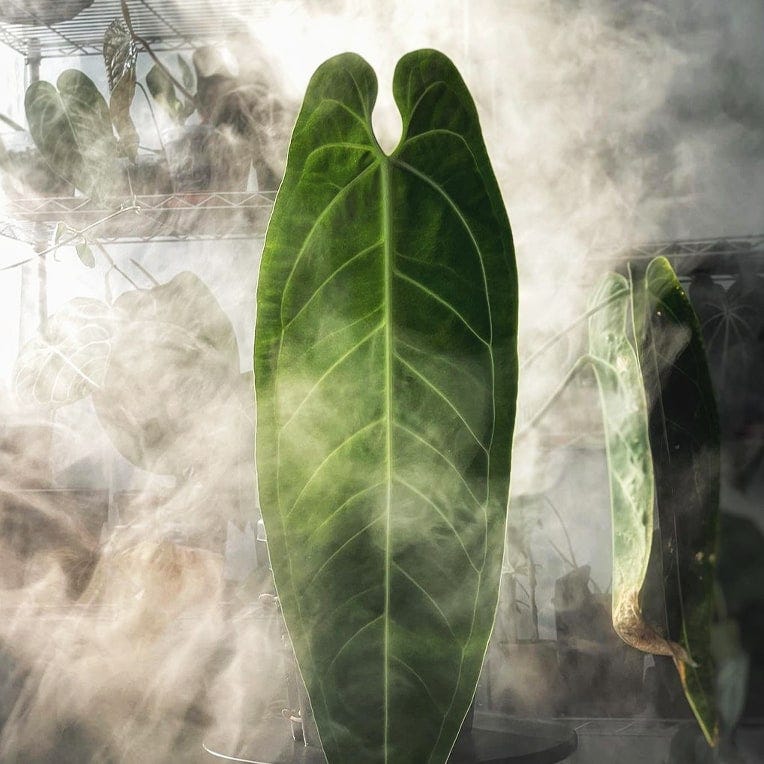
One of the simplest and most obvious ways to treat your tropical plants well is to place them in the more naturally humid areas of your home. As long as your bathroom or kitchen has some natural light, the water vapour from your kettle, sink, shower or bath will regularly create a nice warm, humid environment for your plants. The fact that these conditions aren’t consistent isn’t ideal, but even the temporary increase in humidity will go a long way to keeping your plants happier than in an otherwise dry corner of the living room.
Even better, spread the love by leaving the door to the bathroom open after you’ve steamed it up, this will allow the water vapour to disperse into the wider area of your home. These little gestures go a long way.
Myth busting: Misting is often encouraged as a good way to increase humidity around your houseplants. While misting won’t go amiss, and it can be a pleasurable, mindful activity for us plant parents, in reality it really only increases the humidity around your houseplants for minutes at a time. It doesn’t take long for those water droplets to evaporate so unless you’re misting regularly throughout the day, every day, it’s unlikely to have any significant long term effect on the health of your tropical plants.
Throw the windows open
As long as it’s not blowing a hoolie and you’re not going to let in a hot or cold draft that directly buffets your plants, then regularly open your windows. It’s always more humid outdoors than in our homes, so by letting some of the outside air in, you can even out the balance. This will give your plants a taste of the great outdoors from which they hail and allow them to regulate themselves more naturally.
Pretend it’s a pond
This is a good trick in the height of summer and winter too. Place a bowl of water on a sunny windowsill, near a fan, or near a heat source like a radiator. As the water evaporates it’ll gently increase the ambient humidity in your home. While you might not notice the difference to yourself, you’ll be giving your plants a helping hand by reducing the work they have to do to keep themselves hydrated. You’ll be surprised how quickly the water level drops so don’t forget to keep topping it up.
Join the dots
Many people dot their plants around a room, which of course, is down to personal taste. But, by grouping your plants together, did you know that they create their own little microclimate? As they collectively transpire and release water vapour through their leaves, this is more likely to get trapped and linger in the air around your plants - almost like a tree canopy - than disperse into open space. This benefits not one, but all of the plants in the grouping and is as close as they’ll get to mimicking their native growing conditions. The advantage for you is a statement grouping that brings together plants of different heights, colours, patterns and textures that together create a banging jungle aesthetic. Win win!
Fake it until you make it
If you haven’t already heard of LECA balls then you’re in for a treat because they’re a game changer when it comes to growing indoor plants. LECA is an acronym for Lightweight Expanded Clay Aggregate which comes in the form of small, porous round balls or nuggets. They can be used in hydroponic systems instead of soil, mixed in with potting compost for particularly moisture loving plants, or used as a topdress. For the purposes of increasing humidity, we’re suggesting using them as a topdress, applying a decent layer of about 2 to 3 centimeters to the surface of the soil.
As you water your plant from above, make sure to moisten the clay balls too. By covering the soil they prevent moisture evaporating from the exposed surface thereby keeping it damp for longer, as well as holding onto some of the moisture and slowly releasing this as water vapour, increasing the humidity around your plant/s. This is an excellent trick for tropical plants. Watch how I do it here:
One thing that makes them a bit of a chore is that because they’re made from clay they can arrive quite dusty and need to be prepared before use. This involves soaking them for one hour before rinsing them and then soaking them again for several hours before rinsing them again. Removing excess dust opens up their pores and allows them to absorb and hold onto water more effectively. Using LECA balls as a topdress can also make it tricker to do the finger dip test to assess watering, so if you go down this road, we suggest using a long wooden skewer to poke down into the soil instead.
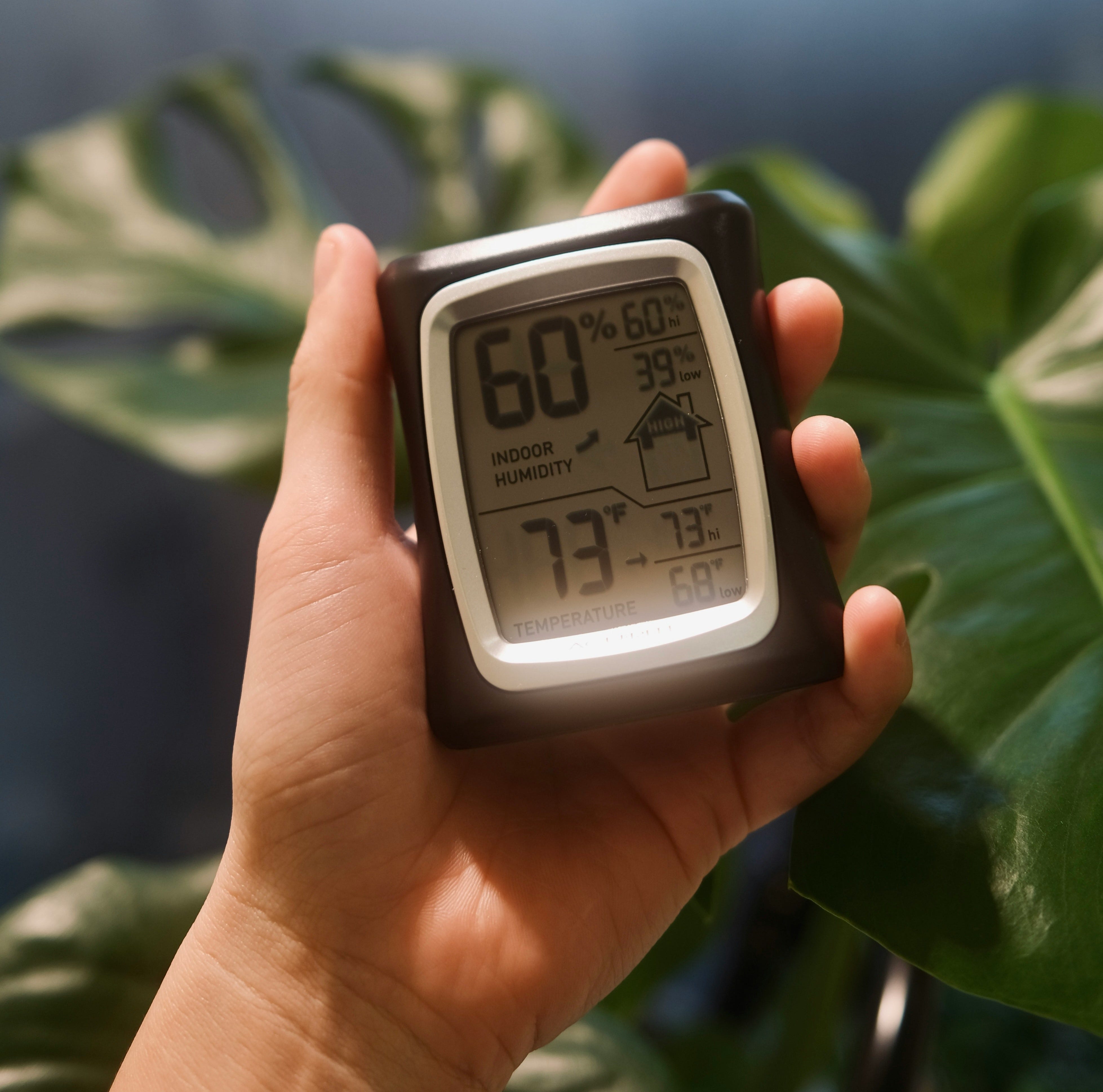
Myth busting: One of the oldest and most common recommendations for increasing humidity around our houseplants is to sit the nursery pot on a dish of moist pebbles. The theory is that the water will slowly evaporate, releasing water vapour around the plant. Over recent years this has proven to be ineffective, with the vapour barely rising above the surface of the pebbles, let alone to the level of the foliage. We tested this out with a hygrometer and the results were indeed, inconclusive.
Humidifier
If you’re serious about upping your plant parent game or have a bit of dosh to spare, then investing in a humidifier is the most obvious long term strategy to combat crispy edges. It’s bound to benefit you too, counteracting the dehydrating effects of heating and aircon, making the ambient environment kinder to your eyes and skin. This is really only required if you’re trying to create an indoor jungle in a modern, well-insulated new build. Those of you in older buildings who are trying to combat dampness will likely baulk at the idea of adding more humidity and will probably benefit from a de-humidifier. Either way, your plants will tell you what they need, it’s simply a case of observing them closely and learning their language.
Side note: As much as many tropical plants need high humidity to thrive, it’s important to balance this out with regular ventilation and good air circulation. If humidity gets too high and the air becomes too moist and stagnant, you’re likely to experience the adverse effects of mould and fungal diseases. Combined with poor drainage, high humidity can also result in a recipe for root rot. Certain pests like Mealy Bug also thrive in humid conditions and can be really tricky to get rid of once they’ve made a cosy home for themselves. Keep a close eye!