
Prayer plants: A holy package

Some of the best loved and most coveted houseplants because of their paddle shaped leaves, striking patterns and vivid, colour-saturated variegation, Prayer plants can be ‘fussy’ to care for. Armed with some context and care tips however, there’s no reason why we can’t grow these lush, leafy, tropical plants in our homes.
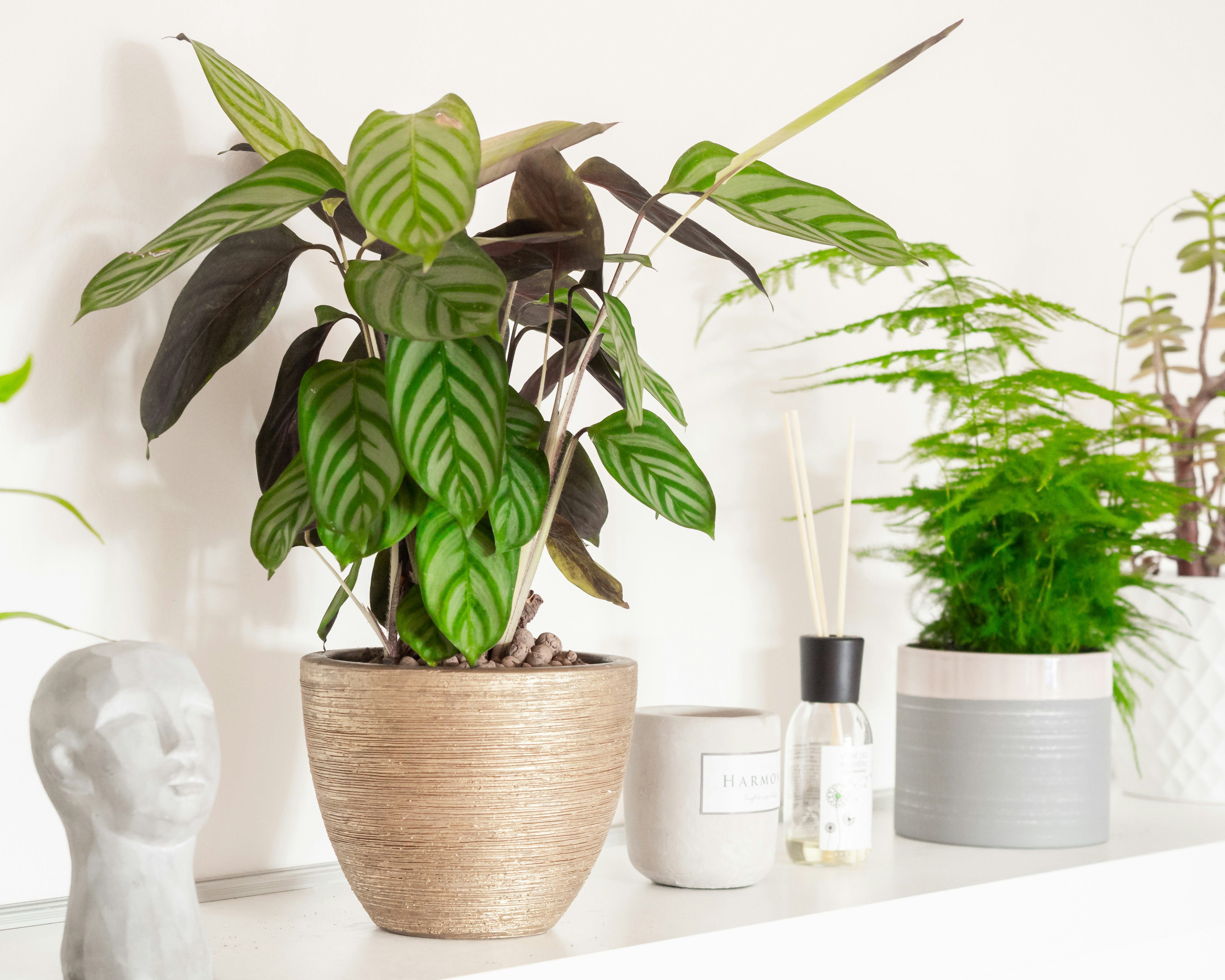
Photo by Katka Pavlickova on Unsplash
The confusion of classification: Calatheas, Marantas, Ctenanthe, Stromanthe and Goeppertia
Let’s get clear on a few things. The genus ‘Calathea’ is often used to refer to a wide variety of plants that aren’t actually Calatheas but which do share the clever characteristic of closing and opening their leaves, likening them to hands brought together in prayer and so lending them the common name ‘Prayer plants’. This is largely due to the fact that a number of plants have been reclassified in recent years as more research has been done on genetics, flower shape and structure etc.
There are about 60 plants in the genus Calathea which fall within the plant family Marantaceae, alongside their close relatives Maranta, Ctenanthe, Stromanthe and Goeppertia. In the wild they all grow in warm, wet tropical conditions as forest floor plants, which means the way we need to care for them in our homes as houseplants is similar. While they’re rare and special to us in the UK, in their countries of origin plants in the Marantaceace family are such an abundant resource that local people use their large leaves as packaging to wrap food like fish and rice.
Some of the our favourite Marantaceae family members include Corby the Goeppertia orbifolia (‘orbifolia’ meaning ‘round leaved’), Jesse the Goeppertia lancifolia (‘lancifolia’ meaning ‘lance-shaped leaves’), Maranta leuconeura (‘leuconeura translating to ‘white string’, referring to the veins on the leaves) and Tristan the Stromanthe sanguinea ‘Triostar’ (‘sanguinea’ referring to the ‘blood-red’ colouration on the leaves combined with white and green to give a ‘trio’ of colours).
Dancing plants, evening prayers and holy water
If you are the proud parent of a Prayer plant then you’ll be familiar with their remarkable habit of lowering, lifting or folding up their leaves at night, and sometimes even on a gloomy day. But how do they do this, and why exactly?
The secret is nyctinasty, a delicious word in itself. The onset of darkness and shifts in temperature stimulate changes in water and sucrose movement together with levels of potassium in plant tissue, which result in changes in pressure. These shifts in turgor (rigidity) trigger pulvinus motor cells located at the base of the leaf stalks into action, causing the leaves to expand or contract and flex – think of them like your elbow or knee joints. The result is the most mysterious display of movement, a bit like a dance, and is a reminder that our houseplants are living beings interacting with their surroundings, not just beautiful ornaments. Watch them doing their dance in the video below.
Listen out for them too . . . while you might not always catch a glimpse of your Prayer plants moving, you might well hear their leaves rustling as they rearrange themselves, even without the slightest breeze. Don’t be fooled, while it can be startling, it’s not the sound of an intruder!
While we now know how they do it, why Prayer plants perform this peculiar function is still uncertain. Possible explanations include that by folding up their leaves they are less vulnerable to being nibbled on by browsing herbivores, that it helps to regulate their temperature, to remove surface water from their large leaves and even to protect and keep their pollen dry so that it’s available to night time pollinators like bats and moths. While none of these survival mechanisms are useful in the comfort of your living room, Prayer plants hold on to their in-built circadian rhythms and we get to enjoy observing them.
While this next phenomenon is unlikely to happen at home – and this is no bad thing when you find out what it is – we thought you’d like to know how in the wild, Prayer plants act as ecosystems. Where they grow in large, spreading clumps on the forest floors of places like Cuba, Venezuela and Ecuador, frequent rainfall collects in their leaves and flowers to form little pools. These mini-ponds serve as breeding and drinking waters for creatures like ants, mosquitos and beetles, supporting the rich biodiversity characteristic of these tropical countries. No mozzies here though thanks!
Highly sensitive plants, and why their leaves don’t lie
Prayer plants aren’t only sensitive to changes in light levels, they’re pretty particular about well, everything. If Peace lilies are the divas of the houseplant world, then Prayer plants are royalty, and need to be treated as such. Serve their sensitivities well though, and you’ll be richly rewarded with a foliar fireworks display.
If in doubt, filter it
Be it light or water, the key to keeping your Prayer plants healthy is to filter it.
Because plants like Calatheas and Goeppertia are understory (low, ground growing) rainforest plants, they thrive in bright but dappled light that in the wild, would be filtered by the tree canopy above. Unlike sun-loving plants they prefer medium light conditions and unless your home is north facing, they need to be positioned slightly away from rather than right next to a window. While they don’t like bright direct light, they won’t like deep shade either, so it’s about hitting that sweet spot. You’ll know yours is getting too much light if its colours start to fade or you see burnt, scorched (brown and crispy) patches on its leaves, and you’ll know it’s getting too little light if your plant hardly grows at all, or if its soil is still very wet from week-to-week.
Bearing their tropical origins in mind, when it comes to watering, Prayer plants are partial to consistently lightly moist soil - we did say they were fussy! There’s a fine balance between watering them too much so that they end up with soggy bottoms, and not watering them enough so that their leaves wilt and curl with dehydration. Your best bet is to check on them weekly and do the finger dip test to assess their dryness. Please don’t judge whether they need a drink by the soil surface alone, as you may find the soil is still moist deeper down in the pot.
Where possible, collect rain water, use filtered or still. Prayer plants are really sensitive to hard tap water and chlorine and you’ll know yours is struggling if it gets unhealthy looking spots on its leaves or dry leaf tips and edges. If tap water is your only option, let it sit in the can for up to 24hours before watering, by which time most of the chlorine will have evaporated. The bonus of this method is that the water will reach room temperature, which is the preference of these particular plants. When you do water, drench the whole root ball evenly and let it drain, tipping out any excess. And lastly, water the soil, not the leaves.
If you have left your Prayer plant a bit too long between drinks with the result being a dramatic wilt, there’s no reason it won’t bounce back. We suggest giving it a dunk by submerging the whole nursery pot, soil and all, in a sink of room temperature water until all of the air bubbles escape to the surface. This will ensure the whole root ball is drenched and there’s no dry air pockets left in the soil. Just make sure to let it drain until no more water is dripping out the bottom of the nursery pot, before popping it back into its decorative container.
Yellowing leaves are a sure sign of over, under or inconsistent watering, so take these as a sign that something in your Prayer plant parenting needs tweaking.
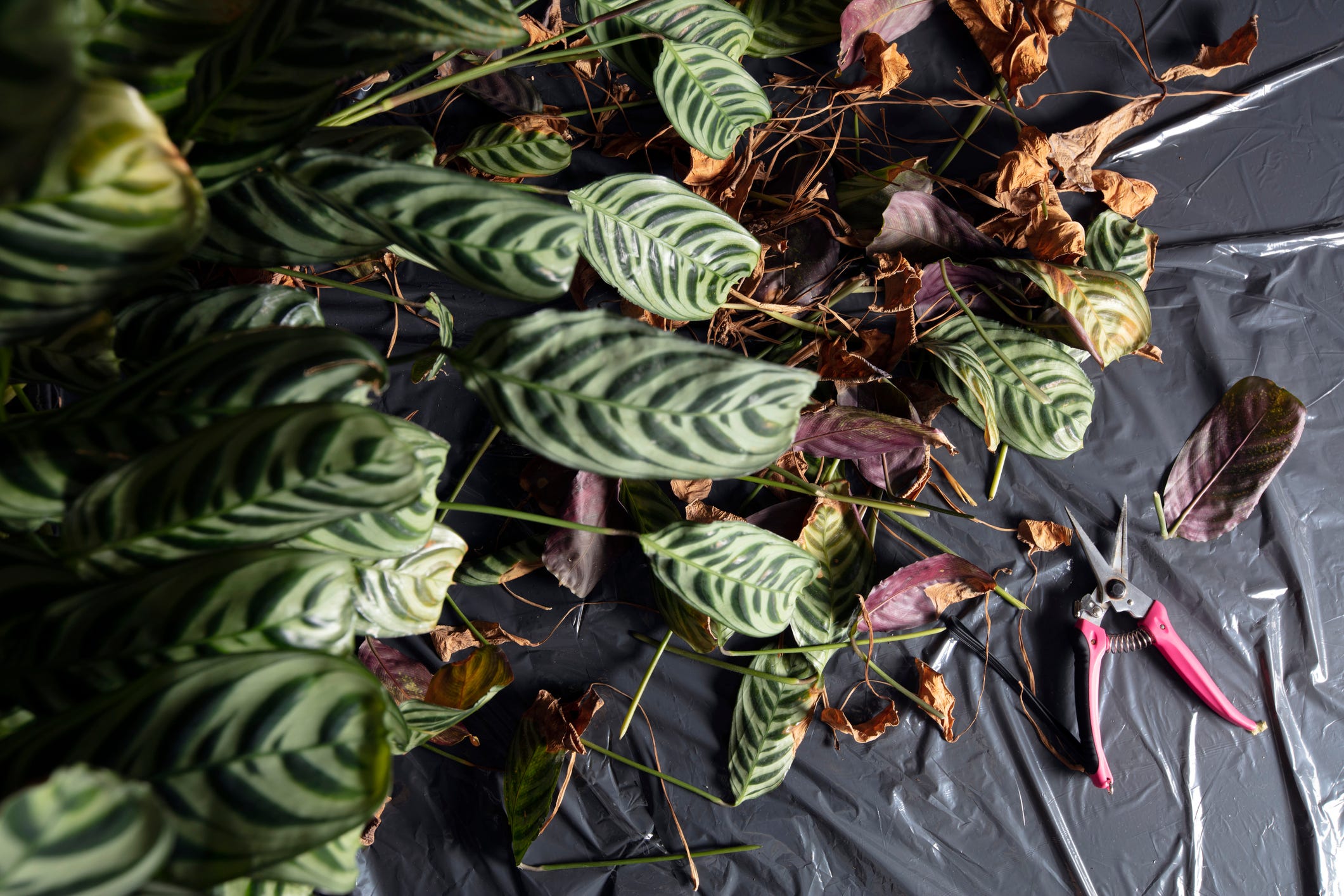
Photo thanks to Solnuha on Unsplash
Keeping an even keel
One to watch with Prayer plants is making sure they don’t lose their temper. We mean monitoring their temperature of course 😉 because below fifteen degrees you’re sure to see signs of stress. Keep your plant in a room that doesn’t get too cold and avoid positioning it in hot or cold drafts, whether these be from windows, aircons or heating. The trouble with trying to keep our own temperatures regulated is that the side effects of our modern conveniences tend to suck all the water vapour out of the air. Just as we end up getting dry skin (that we can then moisturise to counteract the aircon effect), the leaves of your Prayer plants will soon tell you they’re suffering from lack of humidity by going brown and crispy and curling up.
While older homes tend to be less well insulated and have higher humidity, plants in modern new-builds tend to struggle more. That doesn’t mean you can’t grow tropical plants, it just means you need to make a few adaptations to help them thrive. The most obvious option is investing in a humidifier. Yes, that IS what we mean, not a de-humidifier, which us Victorian terrace dwellers are all too familiar with. Other avenues include grouping your plants together so that they can create their own little micro-climate, placing your more tropical plants in the steamier rooms of your house – kitchens or bathrooms, and regularly opening your windows to regulate the humidity between the outside and inside worlds.
What you shouldn’t do with Prayer plants, is mist their leaves. We know this practice is all too often touted as the solution to raising humidity around tropical houseplants, and in most instances, it won’t do any harm, even if as a solution it’s short term. But Calatheas, Goeppertia, Ctenanthe, Stromanthe and Marantas are the exception to the rule. As we’ve established, this family of plants is highly sensitive to environmental factors, particularly their often thin, delicate and hairy leaves. The risk of misting them is that before the water droplets evaporate, they can magnify the sun leading to scorch, leave permanent discoloured marks, and provide the perfect breeding ground for the start and potential spread of any fungal or bacterial diseases that may be lurking.
The same rule applies to spraying your plant with an insecticide if it gets a pest infestation, even if it’s natural and organic. You’re likely to damage your plant as well as the pests so your safest option is to rinse the leaves under running, room temperature water.
Pamper it like a princess
Since we’re giving our Prayer plants the royal treatment, learning their whims and fancies and bowing to their every need, we may as well go the extra mile.
It’ll be of massive benefit to your plants if you get into the habit of feeding them with a nitrogen-rich plant food at least once a month throughout the growing season, from around April to October. Nitrogen is the nutrient that promotes healthy foliar growth, perfect for lush leafy plants like Prayer plants. Most liquid houseplant foods have a higher N(nitrogen) to P(phosphorus) and K(potassium) ratio.
While feeding is beneficial, repotting your Prayer plants every 2-3 years is essential. Repotting your plants not only ensures that they’re not rootbound and that they have plenty of space to grow, but it replenishes nutrients and makes sure that they’re in a free-draining growing medium, essential for healthy root growth and water/nutrient uptake. Think of your plants roots as their immune system and repotting as a detox. It all starts below soil level. A healthy root system = a healthy plant. If you need help with repotting, find our article giving you step-by-step guidance in our Substack Plant Clinic archive.
Even if you take the best care of your Prayer plant, it’s natural for older leaves to go brown and die back as new growth emerges. A regular haircut and tidy up of dead or dying leaves is key to good hygiene, and key to a healthy plant. Removing dead plant material takes away hiding places for pests and diseases and lets light and air move freely between the leaves and stems. If you’re giving damaged or sick-looking leaves the snip, be careful where you cut back to. If you look closely you’ll notice that on some Prayer plants the new leaves emerge from a protective sheath about a quarter of the way up the stem. By cutting the older leaves right down to soil level, you’re at risk of cutting away new leaves right along with them. Watch me demonstrate this on a Stromanthe ‘Triostar’ as well as Strelitzia nicolai, which shares this feature.
Last but not least, on large-leaved Prayer plants like Calathea ‘Medallion’ aka Juliette or Goeppertia ornata aka Julie, wipe down their leaves with a damp cloth regularly. Removing any dusty build-up allows them to absorb as much light as possible and to breathe freely through the stomata on the undersides of their leaves. Alternatively give them a shower with room temp water, which as we’ve touched on, is a great way to dislodge any niggly pests too.
Whether it be on a wing and a prayer or by practice, you’re now armed with everything you need to know to give caring for these very particular plants (aka fussy devils) a go. There may well be casualties along the way (may the rest in peace) or you may find you have the heavenly touch. Either way, we’d love to hear both your woes and wins. Drop us a message in the chat.
Prayer plant care 101
Water regularly, keeping the soil lightly moist
Use rain, filtered or still water
Avoid direct sun, aiming for bright, filtered light
Position in a humid, draft-free spot
Feed once a month from April to October
Repot every 2-3 years
Tidy up dead/dying leaves